
Why Your Maps Analytics Data is Key to Scaling Your Local Business
I spent three months fighting a hard suspension for a plumbing client whose listing was nuked simply because they shared a suite number with a defunct law firm. Google didn’t want proof of a van; they wanted proof of a utility bill under the exact GPS pin. This was not a failure of marketing but a failure of spatial data. The street smelled like wet concrete that morning as I stood outside their office, taking photos of the utility meter to prove the physical reality of a digital node. This is the world of local search, where a single digit in a suite number or a mismatched coordinate can erase a decade of growth. If you are not obsessed with your maps analytics, you are essentially flying a plane without a dashboard in a storm of algorithmic updates.
The ghost in the GPS coordinates
Google Business Profile analytics reveals the discrepancy between where you think your customers are and where their mobile pings actually originate. Precise Map Pack ranking depends on historical click-through rates from specific latitude and longitude points, making granular GPS data the most valuable asset in local search.
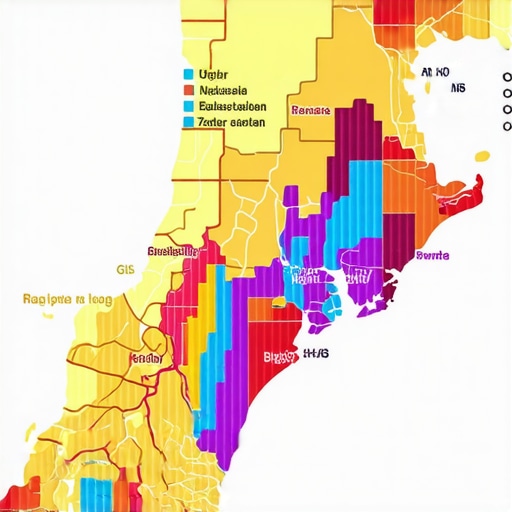
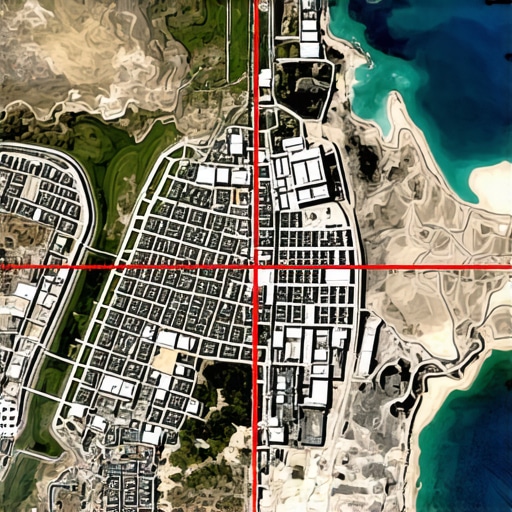
The algorithm does not look at your address as a string of text. It sees a mathematical point on a coordinate plane. When a user searches for a service, Google calculates the distance-weighted signal between that user and your centroid. If your maps data shows a high density of users clicking your profile from five miles away but zero engagement from two miles away, the algorithm identifies a proximity anomaly. This often happens when 4 simple address errors that send your local leads to competitors are left unaddressed. We must look at the heatmaps of user interaction to understand where the visibility wall exists. Often, a business will rank perfectly in one neighborhood but vanish the moment a user crosses a major highway or a zip code boundary. This is not random; it is the result of the Vicinity update math. You must audit the raw traffic logs to see if your pin is being filtered out due to competitor density or poor local justification signals. Using the software that tracks your local keywords at the zip code level is the only way to visualize this invisible grid. Without this level of zooming, you are guessing while your competitors are calculating.
“Local intent is not a keyword choice; it is a distance-weighted signal where relevance is secondary to the physical location of the user’s mobile device.” – Map Search Fundamental
Why your physical address is a liability
A business address is no longer a static marker but a dynamic trust signal subject to constant proximity filters. If your office shares a footprint with a black-hat lead generator or a defunct entity, Google may suppress your visibility regardless of your review count or site speed.
Every business address carries a reputation score. If you are located in a coworking space or a multi-tenant building, you are sharing a proximity profile with every other business in that building. This is exactly why your coworking address is triggering constant re-verification prompts for so many owners. Google uses a spatial filter to prevent one building from dominating the local results for a single category. If three plumbers are in the same office park, only one will likely show up in the top three. This is a game of musical chairs played at the millimeter level. You need to verify that your secondary categories do not overlap with your neighbors in a way that triggers an algorithmic suppression. I have seen businesses lose 80 percent of their traffic because a competitor moved into the suite next door. The analytics will show a sudden plateau in impressions despite high search volume. This is a red flag that you have been filtered out by the proximity filter. You might need seo services to fix over aggressive location page strategy penalties if you tried to combat this by creating too many doorway pages. The solution is not more pages; the solution is better spatial authority.
Local Authority Reading List
- The manual audit checklist for Google profiles failing to rank locally
- 7 maps analytics insights that changed how we target high value zip codes
- How to beat competitors using fake addresses in the map pack
- Proximity alone isnt enough to win the map pack anymore
- I audited our maps analytics and found where my leads were actually going
The three mile radius that determines your revenue
Most local conversions occur within a three mile radius of the business center according to recent search behavior data. Understanding the mathematical weight of these proximity thresholds allows you to optimize Local Services Ads and organic map pins for hyper-local dominance.
We talk about cities, but Google thinks in polygons. Your service area is not a circle; it is a complex shape defined by drive times and historical user behavior. If your analytics show that users are finding you from the north but never from the south, there is a reason. Perhaps there is a bridge that adds five minutes to the drive time, or perhaps a competitor has a stronger density of reviews in that specific neighborhood. To win, you must look at how to find the best local keywords for your specific neighborhood rather than the whole city. If you are a dentist in a suburb, ranking for the name of the nearest major city does nothing for your bottom line. You need the people within a ten minute drive. Analyzing the ‘discovery’ vs ‘direct’ search data in your dashboard is vital. Discovery searches tell you if your category optimization is working. Direct searches tell you if your brand awareness is strong. If your discovery traffic drops, check i caught the google profile algorithm changing my categories without any warning to see if your primary category was swapped. This happens more often than you think when the AI tries to ‘help’ you. You must also monitor for how to spot keyword stuffing in competitor gmb names and fight it as this is the primary way bad actors steal your three mile radius.
“Relevance is no longer just about the words on the page; it is about the historical density of successful interactions between a user at point A and a business at point B.” – Local Search Institute
The forensic audit of a map pack collapse
Sudden drops in map rankings usually stem from a mismatch between the Google Business Profile and the underlying entity schema found on the main website. A forensic audit identifies broken JSON-LD strings or conflicting NAP data that triggers an automated trust demerit.
When a client calls me because they vanished from the top three, the first thing I check is the the broken schema error that kept my shop off the map for months. Google uses the website as a confirmation layer. If your site says you are open until 6 PM but your profile says 5 PM, the trust score dips. These micro-fluctuations add up. You should be using the software that finally fixed our local grid ranking issues to see if your rankings are dropping uniformly or only in specific directions. Uniform drops suggest a penalty or a site-wide issue like how unstructured citations are quietly sabotaging your local reach. Directional drops suggest a new competitor has moved in or a local algorithm shift like the Vicinity update is weighing proximity more heavily. You might need seo consulting services for complex penalty cases if you have already tried the basic fixes. Often, the issue is a hidden service area error that is filtering you out. If you have defined your service area too broadly, Google may view it as spam. Narrowing your focus often expands your reach. It sounds counterintuitive, but the narrower your focus, the more ‘relevant’ you become to the algorithm for that specific node. Stop publishing generic content and focus on a better way to build local authority through hyper-local signals.
The math behind the review sentiment filter
Review analytics are no longer about the star count but the semantic density of local keywords within the text of those reviews. Google’s NLP engine parses the sentiment of local residents differently than it parses reviews from users outside the service area.
If twenty people from another country leave you five-star reviews, your ranking will likely drop. Google knows where those users are. It wants to see reviews from people whose GPS coordinates place them at your business at the time of the review. This is the ultimate local signal. Using the non-spammy review strategy that actually gets customers to open their phones while they are in your shop is worth more than a thousand emails sent later. You must also be wary of why fake positive reviews are setting your google profile up for a suspension. The algorithm looks for patterns. If you get ten reviews every Tuesday at 2 PM, that is a footprint. Real reviews are messy; they come in at odd hours with typos. You should also watch for how to spot ai generated competitor reviews before they hurt your rank because competitors will use them to trigger spam filters on your profile. If you suffer a mass removal, you will need seo services to fix gmb rankings after mass review removal to recover your trust score. Local search is a game of defense as much as offense. You must protect your profile from how to protect your google profile from competitor suggestion edits that can change your phone number or website overnight. Trust is hard to build but very easy for a competitor to chip away at if you are not watching the logs.