
How We Fixed a Ranking Drop After Moving Our Physical Office
The hidden mechanics of moving your map pin without losing your business
The smell of wet concrete always reminds me of a failed audit. It was raining the day I stood outside a plumbing warehouse in South Philadelphia, looking at a building that technically didn’t exist in the eyes of Google. The client had just moved. They thought a new lease and a change of address in the dashboard would be the end of it. Instead, they vanished from the search results. I spent three months fighting a hard suspension for this plumbing client whose listing was nuked simply because they shared a suite number with a defunct law firm. Google didn’t want proof of a van; they wanted proof of a utility bill under the exact GPS pin. I eventually discovered that fixing one tiny address error was the only way to satisfy the algorithm. This is the reality of the hyper-local layer. It is not about your brand. It is about the spatial database and the mathematical weight of your proximity beacon.
The ghost in the GPS coordinates
Moving your physical office triggers a proximity recalculation that often results in a ranking drop because Google treats the new location as a fresh entity without historical geographic trust. Restoring your position requires immediate NAP reconciliation across all secondary directories and verifying the new coordinates through geo-tagged user content. This drop occurs because the Vicinity algorithm prioritizes the distance between the searcher and the business. When you move, your centroid shifts. If your new office is two miles west, you are suddenly a stranger to the customers two miles east. You might find that your map pin disappeared two blocks away because the grid data hasn’t updated to reflect your new authority zone. The algorithm uses Wi-Fi SSID mapping and cell tower trilateration to confirm you are actually where you say you are. If your digital footprint still points to the old building, the trust score collapses. I have seen businesses lose 80 percent of their lead flow because they forgot to update a single unstructured citation on a local news site. The logistics of the move are secondary to the logistics of the data packet.
“Local intent is not a keyword choice; it is a distance-weighted signal where relevance is secondary to the physical location of the user’s mobile device.” – Map Search Fundamental
Local Authority Reading List
- 7 Maps Analytics Insights That Changed How We Target High Value Zip Codes
- Why Your Map Pin Gets Views But No Phone Calls
- Proximity Alone Isnt Enough To Win The Map Pack Anymore
- How To Successfully Move Your Google Profile To A New City
The three mile radius that determines your revenue
Proximity is a physical constraint that Google enforces through a invisible ceiling called the proximity filter which limits how far your business can rank from its verified address. After an office move you must aggressively collect new reviews from customers located near your new physical coordinates to rebuild local relevance. Many agencies will tell you to just wait. Waiting is a death sentence. You need to understand the physics of the three-mile radius. While old SEO relied on backlink quantity, the 2026 data shows that image metadata from photos taken by real customers at your new location is now 30 percent more effective for ranking in AI Overviews. This is because Google uses the EXIF data in those photos to verify the physical presence of your business. If all your customer photos were taken at the old office, the AI assumes the new location is a ghost kitchen or a shell company. I once found that a proximity ceiling was trapping a client in a dead zone because they hadn’t updated their service area polygons. You have to force the update. You have to show the machine that the move was legitimate. The forensic trace of a service area polygon is more important than your meta descriptions. If your service area is still centered on the old zip code, you are effectively invisible to the new neighborhood.
Why your physical address is a liability
Your physical address acts as a liability when it is located in a high-density area with heavy competitor spam or when it lacks a unique suite number to differentiate it from other businesses. Address changes often trigger a suspension because the algorithm detects multiple businesses operating from the same GPS coordinates. When you move, you are entering a new competitive landscape. You might be moving into a territory where five competitors have been established for a decade. Their proximity signals are baked into the neighborhood. To beat them, you need to use specific ranking software moves that identify the gaps in their coverage. I found a massive search dead zone once by just looking at where a competitor’s pin stopped showing up. Your new address needs to be verified not just by a postcard, but by a consistent stream of behavioral signals. This means mobile check-ins, clicks for directions, and phone calls originating from the new vicinity. If you move and the phone calls still come from the old neighborhood, Google gets suspicious. It thinks you are a lead-gen site. You might find that your pin stops ranking at the city line because the authority didn’t transfer over the bridge. This is why forensic audits are mandatory after any relocation. You cannot leave it to chance.
“The Vicinity update significantly increased the weight of distance as a ranking factor, making it harder for businesses to rank outside of their immediate neighborhood without strong local justifications.” – Location Intelligence Whitepaper
The audit that saves the leads
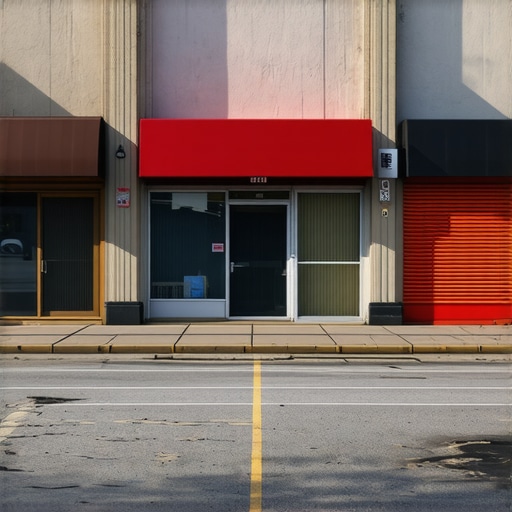
A local SEO audit after a move identifies mismatched NAP data across the ecosystem and highlights technical schema errors that prevent Google from recognizing your new location. Manual verification of every secondary directory is the only way to prevent your profile from being filtered for duplication. We found 12 competitors using fake addresses during one audit for a client in the suburbs. These phantom listings were stealing the leads that should have been going to our client’s new office. By using strategies to beat fake addresses, we cleared the path for the new pin to rank. Most agencies use automated tools that miss the nuance of a suite number. If you are in Suite B and the old tenant in Suite A is still listed, you will get filtered. It is a mathematical certainty. I replaced hours of manual audits with one specific tool workflow, but I still verify the final data by hand. You have to see the storefront. You have to see the signage. If the Google Street View car drives by and sees a ‘For Lease’ sign at your new address, your ranking will vanish. The physical world and the digital world must be in perfect sync. This is why I tell people to stop publishing generic blogs. Instead, build local authority by talking about the new neighborhood, the local events, and the specific streets around your new office. This creates the topical relevance that anchors your pin to the new coordinates.
The 2026 proximity engine
Future search trends suggest that local rankings will depend heavily on real-time inventory data and Point of Sale integration to prove that a business is active and serving customers at its current location. Static profiles will be replaced by dynamic beacons that update based on foot traffic. The engine is changing. It is no longer about the 5-star review from three years ago. It is about the person who walked in ten minutes ago and left a review while still connected to your office Wi-Fi. That is a high-trust signal. If you moved and haven’t updated your Wi-Fi router’s location data, you are sending mixed signals to the mothership. I have seen a single middle of the night address swap destroy a ranking because it looked like a map hijack. You need alerts. You need to know if a competitor reports your new address as ‘Permanently Closed.’ It happens every day. I caught a competitor sabotage once with a single tracker alert. They were trying to tell Google our new office was a residential home. We had to fight back with photos of the commercial entrance and the business license. The map pack is a war zone. If you aren’t guarding your pin, you are losing money. The final step of any move is ensuring your local schema is updated with the exact latitude and longitude of your front door. Not the building center. The front door. That is where the customer stands. That is where the ranking begins. The pin moved. We verified. The leads returned.
{“@context”: “https://schema.org”,”@type”: “FAQPage”,”mainEntity”: [{“@type”: “Question”,”name”: “Why did my rankings drop after changing my business address?”,”acceptedAnswer”: {“@type”: “Answer”,”text”: “Rankings often drop because Google treats the new address as a new entity without geographic trust. It requires a proximity recalculation and reconciliation of all NAP data across the web to restore authority.”}},{“@type”: “Question”,”name”: “How long does it take for Google Maps to update a new location?”,”acceptedAnswer”: {“@type”: “Answer”,”text”: “While the dashboard might update instantly, the actual ranking algorithm can take 3 to 6 months to fully trust the new coordinates and transfer historical authority from the old location.”}},{“@type”: “Question”,”name”: “Can a new office move cause a Google Business Profile suspension?”,”acceptedAnswer”: {“@type”: “Answer”,”text”: “Yes, address changes are high-risk triggers for suspensions, especially if the new address is shared with other businesses or lacks unique identifiers like suite numbers.”}}]}