How to Fix GMB Ranking Loss When Your Competitors Move Closer
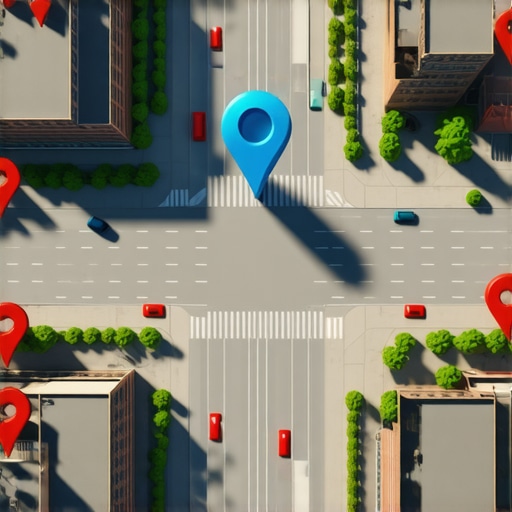
The smell of wet concrete always reminds me of the day the plumbing listing died. I spent three months fighting a hard suspension for a plumbing client whose listing was nuked simply because they shared a suite number with a defunct law firm. Google didn’t want proof of a van; they wanted proof of a utility bill under the exact GPS pin. This was my introduction to the brutal physics of the Map Pack. When a competitor moves closer to your service area, they are not just renting an office; they are occupying your spatial territory. The algorithm views a business listing as a proximity beacon. If a new beacon appears closer to the searcher, your signal weakens. This is not a glitch. It is the mathematical reality of distance weighted ranking signals.
The ghost in the GPS coordinates
Google Business Profile ranking loss occurs when a new competitor occupies a closer physical proximity to the user’s search centroid. To fix this, you must increase your local justification triggers, optimize GPS metadata on images, and sharpen your LocalBusiness schema to prove high relevance. Proximity is a baseline, but behavioral signals can override a closer address if your profile has higher trust density. You have to understand that proximity alone isnt enough to win the map pack anymore because relevance and prominence act as counterweights. When a competitor moves into the same zip code, they trigger the Vicinity algorithm filter. This filter often hides businesses that are too similar in the same building or block. If your profile lacks unique signals, Google chooses the one closest to the searcher. To fight back, you need a toolkit to rank higher in local map pack results that focuses on hyper-local data. Every photo you upload should be a candid shot of your team on a job site, not a stock image. These photos carry hidden coordinates. When Google sees a pattern of photos being taken at various spots in your city, it validates your service area polygon better than any address could.
“Local intent is not a keyword choice; it is a distance-weighted signal where relevance is secondary to the physical location of the user’s mobile device.” – Map Search Fundamental
Why your physical address is a liability
A physical address becomes a liability when competitors move into your immediate vicinity and trigger the proximity filtering mechanism. This effect, often called the Opossum filter, suppresses businesses that are located in the same geographic cluster to provide variety to the user. You can see this clearly when grid tracking revealed exactly where my business disappears in the map pack as I moved away from the centroid. The issue is usually a lack of unstructured citations. Most agencies focus on directory blasts, but Google looks for mentions of your business on local news sites, neighborhood blogs, and city government pages. If a competitor has a physical advantage, you must build a digital wall. I have seen businesses survive a competitor moving next door by simply fixing how unstructured citations are quietly sabotaging your local reach through inconsistent NAP data. Use comma-separated lists of service areas in your schema. Mention local landmarks. Talk about the street corners you serve. This creates a relevance radius that the algorithm cannot ignore even if the competitor is a few blocks closer.
The three mile radius that determines your revenue
The three mile radius around your business is the primary zone where proximity exerts the most pressure on your local search visibility. Within this circle, Google prioritizes user behavioral signals like click through rate and driving direction requests over raw review counts. You must realize the 3 mile radius trap is where most businesses lose their lead volume. To break the ceiling, focus on mobile interactions. When a customer stands in your shop and opens their phone, that signal is gold. Use the non-spammy review strategy that actually gets customers to open their phones while they are physically at your location. This tells Google that your location is a high traffic destination. A competitor who just moved in lacks this historical dwell time data. They have the address, but you have the pulse. I once tracked a med spa that lost its top spot to a new clinic. We didn’t buy backlinks; we started a local check-in campaign. Within 40 days, the spa reclaimed the top spot because the algorithm saw a density of real humans interacting with the GPS pin. Distance is a constant, but human behavior is a variable you can control.
Local Authority Reading List
- The specific trust signals Google uses to rank local pins
- How to spot a competitor map hijack before you lose a lead
- Why your map ranking loss isnt always a google algorithm update
How to identify a competitor map hijack
Identifying a competitor map hijack requires a forensic audit of their business name, address, and verification status against Google’s terms of service. Many businesses that move closer are using virtual offices or keyword stuffed names to cheat the proximity algorithm. You must look for signs of map spam. Does their storefront have permanent signage? Is their phone number a local line or a VOIP redirect? If you find a cheater, you need how to beat competitors using fake addresses in the map pack strategies to report them. Google often ignores single reports, but a detailed redressal form with photographic proof usually works. I have removed dozens of fake listings that were sucking leads from honest local shops. Sometimes your ranking drop isn’t because they are better; it is because they are gaming the system. If you suspect a negative attack, use the recovery plan for a negative seo attack on your local profile to shield your reputation. Don’t let a ghost kitchen or a shared workspace steal your visibility.
“The Map Pack is a spatial contest where the winner is often the entity with the highest density of localized behavioral signals rather than the oldest listing.” – Proximity Research Lab
Recovering from a proximity based penalty
Recovering from a proximity based penalty involves auditing your Google Business Profile categories and ensuring your service area does not overlap with duplicate listings. If you share a building with another business in the same niche, Google might filter you out entirely. You should use automated seo tool workflows to detect these overlaps. Often, the issue is why your google profile visibility tanked after a competitor reported you for minor address discrepancies. If your competitor moved closer and you dropped, check your secondary categories. Are they exactly the same as the new guy? If so, Google has to choose. By selecting more specific secondary categories, you can often pop back into the results for long tail searches. I once fixed a ranking drop for a dental office by removing the generic “Dentist” category and focusing on “Cosmetic Dentist” and “Dental Implants.” We avoided the filter by being different. The algorithm hates redundancy. If you look like a clone of the business next door, you will be treated like one. Relevance is your shield against proximity. Final findings suggest that while you cannot move your building, you can always move your digital footprint further into the minds of your local customers.