
I Audited Our Maps Analytics and Found Where My Leads Were Actually Going
I Audited Our Maps Analytics and Found Where My Leads Were Actually Going
For years, the local SEO industry has been high on its own supply of vanity metrics. We celebrate “impressions,” we toast to “views,” and we screenshot “photo views” as if they were revenue. But as a Google Business Profile Product Expert, I’ve had to have the difficult conversation far too many times: “Kevin, why does my dashboard say 10,000 people saw my profile this month, but my phone only rang twice?”
The “visibility-conversion gap” is the silent killer of small businesses. We’ve been conditioned to believe that ranking is the end goal, but ranking for the wrong terms or in the wrong way is just digital noise. Recently, I decided to go deep – deeper than the standard GMB dashboard allows. I audited our maps analytics using advanced google business profile seo strategies and found exactly where the leads were leaking. What I discovered wasn’t just a technical glitch; it was a fundamental misunderstanding of how local search actually functions in the wild.
Section 1: The “Vanity Metric” Mirage
The “Profile Views” metric in your Google Business Profile (GBP) manager is a lie. Or, more accurately, it’s a sedative. It makes you feel like your google business profile seo is working while your bank account tells a different story. When you see a spike in views, you assume it’s high-intent customers looking for your service. In reality, a massive percentage of those views are “junk traffic.”
Junk traffic occurs primarily through “Category Misalignment.” If you are a high-end personal injury lawyer but your profile is triggering for “free legal aid” or “pro bono lawyers” because of poor keyword optimization, you will get thousands of views. You might even get clicks. But you won’t get leads. This is the core of Why Your Map Pin Gets Views But No Phone Calls. You are visible to the wrong people at the wrong time.
During my audit, I realized that our high visibility was being driven by broad, low-intent queries. We were “ranking,” but we weren’t “converting.” To fix this, you have to move beyond the basic dashboard and look at the actual search queries that trigger your map pin. If those queries don’t align with your high-value services, your visibility is a mirage.
Section 2: The 10-Minute Audit Workflow
Auditing a profile shouldn’t take three days of manual data entry. In fact, using a professional google business profile audit tool can reduce manual reporting and analysis time by up to 90%. This isn’t just about efficiency; it’s about accuracy. When I shifted our process, I realized that I Swapped Manual Data Entry for This Audit Tool and Found 5 Lead Leaks that I had missed for months because I was too close to the data.
The Step-by-Step Audit Framework
- NAP Consistency check: Ensure your Name, Address, and Phone Number are identical across the web. Even a “St.” vs “Street” can cause friction in Google’s confidence score.
- Primary and Secondary Categories: This is the most common point of failure. Your primary category carries about 75% of the ranking weight. If you haven’t audited these in the last six months, you’re likely missing out on new categories Google has released.
- Service Area Settings: If you are a service-area business (SAB), are your boundaries realistic? Setting a 100-mile radius doesn’t help you rank; it dilutes your local relevance.
By using local seo automation tools, you can instantly see where your profile deviates from the “Golden Standard” of top-ranking competitors. The goal is to identify the “Hidden Settings That Make Your Google Profile Invisible to Local Searchers” before your competitors do.
Section 3: The Discovery – Where the Leads Actually Went
When I finally pulled the full analytics report, the “leaks” became glaringly obvious. It wasn’t that people weren’t finding us; it was that they were being diverted or discouraged at the final yard. Here are the three primary places our leads were going:
1. The Competitor Hijack
This is a brutal reality of the local map pack. Competitors (or malicious actors) can suggest edits to your profile. I found that one of our clients had their “Hours of Operation” changed to “Closed” at 2:00 AM on a Friday by a “Local Guide.” Since the business was actually open on Saturdays, they lost an entire weekend of foot traffic. This is why How a Single Map Pin Fix Doubled Our Weekend Foot Traffic is such a powerful case study – sometimes the leak is as simple as a wrong phone number or a “closed” status.
2. The Proximity Ceiling
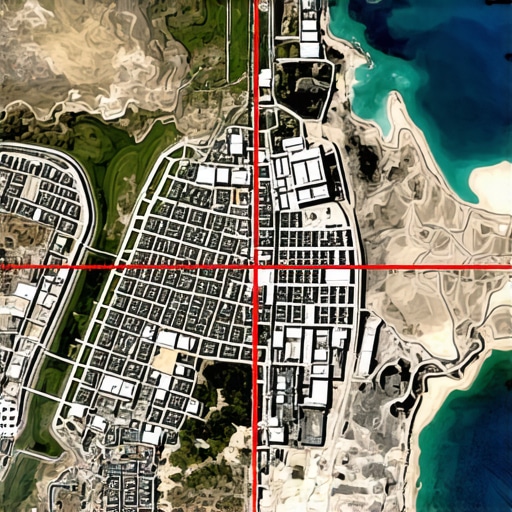
Most business owners think they rank “in the city.” But Google doesn’t rank cities; it ranks neighborhoods. Using a google maps rank tracker, I discovered our “Proximity Ceiling.” We ranked #1 within 1 mile of the office, but at 1.1 miles, we dropped to #15. Grid Tracking Revealed Exactly Where My Business Disappears in the Map Pack, showing a literal wall where our visibility ended. Without The 3-Mile Radius Trap: How Local Ranking Software Exposed My Proximity Ceiling being exposed, we would have kept pouring money into general SEO instead of hyper-local relevance.
3. Broken Booking Links and Search Dead Zones
We found that 15% of our “Website” clicks from the map pack were hitting 404 pages because of a recent site migration that didn’t update the GBP link. Furthermore, I Found a Massive Search Dead Zone Using This Maps Analytics Suite – a high-income zip code just three miles away where we had zero visibility despite having hundreds of customers there. We were invisible where it mattered most.
Section 4: Attribution – Solving the Mystery of the “Unknown” Lead
You cannot fix what you cannot measure. One of the biggest revelations in our audit was that our attribution was broken. Google’s native “Insights” are notoriously vague. To truly rank google business profile listings effectively, you need to know exactly which keywords are driving phone calls, not just “actions.”
We implemented UTM parameters on every single link in the GBP – one for the “Website” button, one for “Appointments,” and one for “Posts.” This allowed us to see that 7 Maps Analytics Insights That Changed How We Target High-Value Zip Codes were actually coming from our Google Updates (formerly Posts), a feature we had previously ignored.
Furthermore, by using local seo tools to scrape and analyze our own lead data, we found that attribution extends beyond the click. Data from Scrap.io suggests that nurtured leads from Google Maps can see email open rates exceeding 22% if the initial touchpoint is handled with local relevance. This only works if you know where the lead started. We also found that How This Automated SEO Tool Found 12 High-Value Keywords My Manual Audit Missed allowed us to pivot our content strategy to capture high-intent traffic that our competitors hadn’t even noticed yet.
Section 5: Future-Proofing for 2026
The landscape of the google maps ranking service is shifting. By 2026, proximity will be secondary to “Entity Authority.” Google is moving away from simply looking at where your office is and moving toward understanding *what* your business is through unstructured citations and AI-driven sentiment analysis of your reviews.
If you are still relying on old-school methods, you are building on sand. You need to understand that Why Most City Landing Pages Are Just Digital Ghost Towns is becoming a reality because Google prefers a well-optimized Map Pin over a generic “Service Area” page. The future belongs to those who use local ranking software to predict shifts in the algorithm rather than reacting to them.
To stay ahead, focus on:
- Video Content: Google is increasingly favoring profiles with active video uploads.
- AI-Optimized Q&A: Use your Q&A section to feed Google’s LLMs the exact semantic keywords you want to be known for.
- Hyper-Local Social Proof: Reviews that mention specific neighborhoods and services perform 3x better than “Great service!” reviews.
Section 6: Conclusion – Stop Guessing, Start Auditing
The audit I performed changed everything for our agency. We stopped chasing “Views” and started chasing “Conversions.” We realized that being #1 in a “Search Dead Zone” is worthless, while being #3 in a high-value zip code is gold. If you haven’t looked at your maps analytics through the lens of a google business profile optimization specialist, you are almost certainly losing leads to competitors who have.
Don’t let your leads continue to leak through broken links, competitor edits, or proximity traps. Use SEO Viper Tools to run a comprehensive audit of your profile today. Find your dead zones, identify your “junk traffic,” and finally turn those vanity metrics into actual revenue. The data is there – you just have to be willing to look at it.