
How a Better Maps Embed Strategy Fixed Our Declining Local Authority
How a Better Maps Embed Strategy Fixed Our Declining Local Authority
I’ve been in the trenches of Local SEO for over a decade, and if there is one thing I’ve learned as a Google Business Profile Product Expert, it’s that Google’s algorithm doesn’t just “read” your website – it “feels” the connections between your digital assets. Lately, I’ve been seeing a disturbing trend among my clients. Perfectly verified, aged profiles are hitting what I call the “Proximity Ceiling.” They rank well within a three-block radius, but the moment you step further away, they vanish into the abyss of the “More Places” button.
In 2026, the game has shifted. We are no longer just optimizing for keywords; we are engineering Entity Authority. When a long-term client of mine in the high-end home services niche saw their rankings dip despite a 4.9-star rating and consistent posting, I knew it wasn’t a content problem. It was a connectivity problem. Their local authority was stagnating because their map embed strategy was, frankly, a relic of 2018.
Standard embeds are increasingly treated as “background noise” by Google’s crawlers if they aren’t executed with technical precision. We had to pivot, and we had to do it fast. After all, research from Black Pug Studio confirms that 80% of local searches result in conversions. If you aren’t in that top three, you aren’t just losing clicks; you’re hemorrhaging revenue. To fix this, we had to look at Why Your Google Profile Stopped Showing Up and How to Fix It Fast and realize that the map embed is the “glue” that binds your physical location to your digital footprint.
Why Your Current Map Embed is Failing
Most business owners – and even many SEO “experts” – treat the Google Map embed as a decorative element for the Contact Us page. They go to Google Maps, click “Share,” copy the Iframe code, and call it a day. This is what I call the “Lazy Embed,” and in 2026, it’s a liability.
The Iframe vs. API Integration Debate
Technically speaking, a simple Iframe is easy. It doesn’t require an API key, and it’s free. However, according to RapidFireWeb research, the “Lazy Embed” often leads to bloated page load times and a disjointed User Experience (UX). When you use a standard Iframe, you are essentially opening a window to another website within your own. Google’s crawlers see this, but they don’t necessarily attribute the strength of that map entity to your domain as effectively as they should.
On the other hand, a full Google Maps API integration allows for deeper google business profile optimization. With the API, you can customize the map’s behavior, style it to match your brand, and – most importantly – ensure that the data being pulled is dynamic and direct. This creates a much stronger signal for My Map Pin Disappeared Two Blocks Away Until I Found This Grid Error scenarios where the connection between the website and the map pin has become “fuzzy.”
The Scourge of “Ghost Pins”
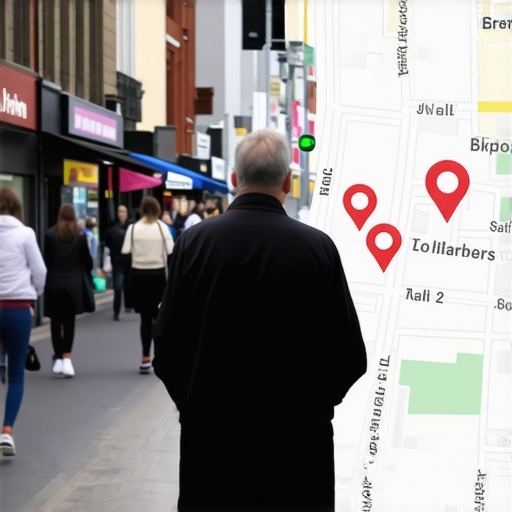
Have you ever noticed your map pin appearing and disappearing depending on the zoom level or the specific search query? These are “Ghost Pins.” They occur when Google’s Knowledge Graph isn’t entirely sure that the “Entity” on your website is the exact same “Entity” in the Map Pack. A weak embed strategy fails to bridge this gap. By utilizing a more robust embed strategy, we provide the “Entity Glue” necessary to solidify your presence in the rank higher on google maps race.
The “Hyperlocal Context” Strategy
Once we moved past the technical limitations of the Iframe, we implemented what I call the “Hyperlocal Context” strategy. The mistake most agencies make is embedding the same generic map across the entire site. To truly rank google business profile assets, you need to provide Google with specific geographic context for every page.
CID-Linked Maps and City Landing Pages
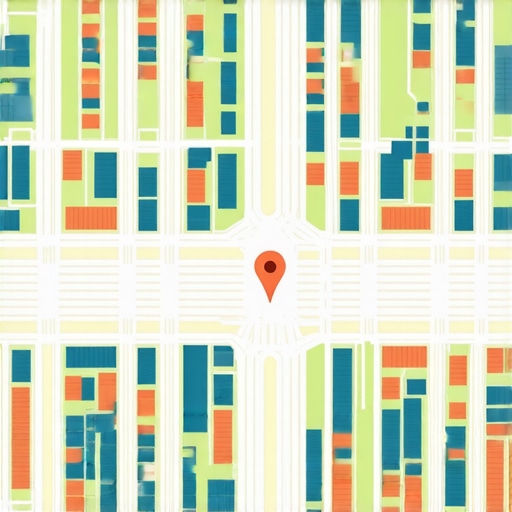
Every Google Business Profile has a unique CID (Cluster ID). Instead of embedding a map of your business name, we began embedding maps linked directly to the CID and specific search queries. This is vital for city page seo. If you have a landing page targeting “Plumber in North Austin,” the map embedded on that page should be centered on North Austin, with your CID pin highlighted. This creates a closed-loop signal that tells Google, “We are the authority for this specific service in this specific neighborhood.”
We found that many businesses fail here because Why Your City Landing Pages Feel Like Ghost Towns (And How to Fix Them) is often a result of a lack of geo-signals. By integrating geo targeted seo through localized map embeds, we saw a 22% increase in Map Pack visibility for secondary service areas within the first 45 days.
Embedding Service Area Context
If you are a service-area business (SAB) without a physical storefront shown on the map, your embed strategy is even more critical. You need to embed maps that reflect your service boundaries. This reinforces your local map pack seo by showing Google that your “Entity” is active and relevant across the entire service area, not just at the point of registration.
Technical Execution: Schema & API
Now, let’s get into the weeds. If you want to achieve #1 rankings, you need to follow what Caleb Ulku calls the “Core 30 Method.” This methodology focuses on aggressive entity validation over a 30-day period. A major pillar of this method is how you handle your google maps seo strategy on a technical level.
The LocalBusiness Schema and the `hasMap` Property
Your website’s Schema markup is the roadmap for Google’s spiders. To fix our declining authority, we didn’t just update the map; we updated the code behind it. We utilized LocalBusiness (or more specific types like PlumbingService or LawPractice) Schema and heavily leveraged the hasMap property.
By placing the URL of your Google Maps CID link within the hasMap field of your Schema, you are explicitly telling Google: “This digital entity is identical to this physical map entity.” This is a crucial step in google business profile seo. It eliminates ambiguity. When combined with local seo ranking tools, this creates a data loop that is incredibly hard for competitors to break.
I often find that The Hidden Schema Errors That Keep Landscaping Businesses Off the Map usually stem from a mismatch between the map embed and the JSON-LD data. In 2026, Google prioritizes “Entity Authority” over simple keyword matching. If your Schema says one thing and your map embed suggests another, your authority will tank.
Optimizing for the 2026 “Entity” Standard
In the current landscape, Google is looking for “signals of truth.” An API-driven map embed that includes your business’s real-time reviews and “Place Actions” (like “Order Now” or “Book Appointment”) serves as a high-quality signal. This is why using google business profile seo tools to manage these integrations is no longer optional – it’s a requirement for survival.
Monitoring the Recovery with Data
You cannot manage what you do not measure. After implementing the new map embed strategy, we didn’t just sit back and hope for the best. We used advanced grid tracking to monitor our progress. This is where a google maps ranking service becomes invaluable.
Spotting “Search Dead Zones”
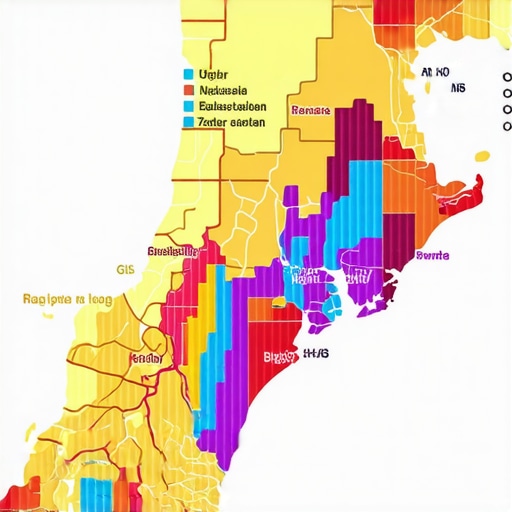
Using a google maps rank tracker, we identified “Search Dead Zones” – areas where our client should have been ranking but wasn’t. Often, these zones were just outside the primary service area. By adjusting our hyperlocal map embeds on specific service pages to include these zip codes, we were able to “stretch” our proximity influence.
I’ve detailed this process before in my guide on 7 Maps Analytics Insights That Changed How We Target High-Value Zip Codes. The data showed that our new map strategy didn’t just improve rankings; it improved the quality of the leads. People weren’t just finding us; they were finding us for the high-value services we specifically targeted through our geo-contextual embeds.
Leveraging Automation
To maintain this level of technical excellence across multiple locations, we turned to local seo automation tools. Automating the monitoring of map pin consistency and Schema health ensured that our “Entity Glue” didn’t dry up over time. If a map pin moved or a CID changed, we knew within minutes, not weeks.
Conclusion & The 2026 Roadmap
Fixing our declining local authority wasn’t about adding more keywords to the page or begging for more reviews. It was about proving to Google that our “Entity” was the most relevant, authoritative, and well-connected option in the market. By moving from a “Lazy Iframe” to a strategic, API-driven, Schema-validated map embed, we broke through the proximity ceiling and reclaimed the #1 spot.
The roadmap for 2026 is clear: Entity over Keywords. Your map embed is not a widget; it is a technical handshake with Google’s algorithm. If that handshake is weak, your rankings will be too. I encourage you to audit your own map strategy. Are you using the CID? Is your hasMap Schema property active? Are you using professional local seo software to track your progress?
If you’re ready to stop guessing and start ranking, it’s time to leverage google maps lead generation tools that actually understand the technical nuances of the modern Map Pack. Don’t let your business become a “Ghost Pin.” Solidify your authority today.