Why Your Maps SEO Campaign is Driving Clicks but Zero Foot Traffic
Why Your Maps SEO Campaign is Driving Clicks but Zero Foot Traffic
You open your Google Business Profile (GBP) dashboard and see exactly what you’ve been paying for: green arrows pointing up. Clicks are up 20%, “Get Directions” requests have spiked, and your impressions are at an all-time high. Yet, when you look at your storefront or check your appointment book, the silence is deafening. The shop is empty, the phones aren’t ringing, and that “record-breaking” traffic feels like a digital ghost town.
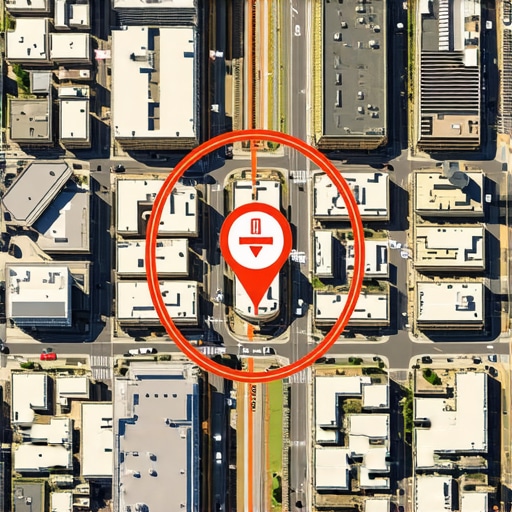
As a Local SEO Consultant and Google Business Profile Product Expert, I see this “Click-to-Customer” gap every single day. The hard truth is that in 2026, vanity metrics are easier to manipulate than ever, but they have never been further removed from actual revenue. Between November 2025 and January 2026, we witnessed a staggering 733% increase in local pack ads. The map is no longer just a directory; it’s a hyper-competitive battlefield where Google is prioritizing its own ad revenue over your organic foot traffic. If you are measuring success by clicks alone, you are looking at a map that doesn’t lead to your front door.
The Illusion of the “Get Directions” Click
For years, the “Get Directions” click was the gold standard of local intent. We assumed that if someone asked Google how to get to your business, they were currently in their car, hands on the wheel, heading your way. In the modern landscape of google business profile seo, that assumption is a dangerous fallacy. A “Get Directions” click is often nothing more than a research phase – a user checking how far you are before deciding you’re too far away, or a competitor checking your location to see if they can outrank you in that specific zip code.
Furthermore, we must address the “privacy threshold” problem. Google’s Store Visit conversions are notoriously opaque for small to mid-sized businesses. Unless your profile maintains a massive volume of daily traffic, Google’s privacy algorithms will often “noise” your data, meaning you never see the actual correlation between a digital search and a physical visit. You might be getting 50 visits a week from Maps, but because you don’t hit the “high-volume” threshold, your dashboard stays silent on actual conversions.
This is why Why Your Map Data Lies About Where Customers Actually Find You is a critical concept to understand. People are “window shopping” on their mobile devices. They click “Directions” to see if you have parking, they click “Website” to see if your prices are listed, and then they bounce. If your profile isn’t optimized to close the deal immediately, those clicks are just a drain on your mental energy and marketing budget.
The 2026 Local Landscape: Why the Old Playbook is Failing
If you are still using 2023 tactics to rank google business profile assets, you are essentially invisible. The December 2025 Core Update was a watershed moment for local search. Data from ALM Corp shows that 59% of tracked sites lost significant rankings almost overnight. Why? Because Google tightened the “Proximity Ceiling.”
In the past, a strong “Prominence” (backlinks and reviews) could help you rank five or ten miles away from your physical location. Today, the algorithm has shifted heavily toward hyper-local “Proximity.” Google has realized that users are increasingly frustrated with being shown results that require a 30-minute drive when a “good enough” option is 5 minutes away. If your business is caught outside this new proximity filter, you might still appear for broad searches – driving “curiosity clicks” – but you won’t rank for the high-intent “near me” searches that actually drive foot traffic.
To diagnose whether you’ve been hit by these proximity filters, you need advanced local seo ranking tools. These tools allow you to see your “heat map” of rankings. If you see a bright green circle around your office that turns deep red just two blocks away, you aren’t suffering from poor SEO; you’re suffering from a proximity chokehold. To break through, you must shift your strategy from broad keywords to hyper-local relevance, ensuring your profile mentions specific neighborhoods, landmarks, and local intersections that the algorithm now demands.
The “Silent Killers”: Competitor Sabotage and Map Hijacking
Sometimes, the reason your clicks aren’t converting isn’t because of the algorithm – it’s because of your neighbors. Competitor sabotage has reached an all-time high. In their latest safety report, Google admitted to blocking 292 million policy-violating reviews and removing 13 million fake profiles. But for every fake profile removed, three more “ghost” listings appear.
One of the most common tactics I see is “Middle-of-the-night address swaps.” A competitor will suggest an edit to your profile, moving your pin just a few blocks away or changing your suite number. If you aren’t monitoring your profile daily, these changes can go live, leading customers to a vacant lot or a locked gate. They click “Directions,” they arrive at the wrong place, they get frustrated, and they leave a one-star review before going to your competitor. This is why a google business profile audit tool is no longer optional; it is a defensive necessity.
We’ve documented cases where businesses lost 40% of their foot traffic in a week due to “Fake business closures” suggested by bot farms. You can read more about these aggressive tactics in our report: How a Google Profile Tracker Caught 3 Map Hijacks [2026 Report]. If you aren’t protecting your digital real estate, you’re essentially leaving your front door keys in the lock for your rivals to find.
Technical Mismatches: When Your Profile Repels Customers
Sometimes the call is coming from inside the house. Your google business profile optimization might be technically “correct” but practically useless. One of the biggest culprits is the mismatch between your “Service Areas” and your actual physical location. If you tell Google you serve a 50-mile radius, but you only have the staff to handle local walk-ins, you are attracting clicks from people you can’t actually serve.
Another issue is the rise of “Ghost Rivals.” These are lead-generation sites that don’t have a physical presence but use virtual offices to “squat” on the map. I recently worked with a client who said, I Found 6 Phantom Competitors Using This Local Ranking Software to Target My Best Zip Codes. These phantoms soak up the clicks, and because they are just lead-gen fronts, the user experience is terrible, which sours the user on the entire “Map Pack” experience, making them less likely to click on any business, including yours.
To fix this, you must audit your profile attributes. In 2026, attributes like “Wheelchair accessible,” “Veteran-led,” or “On-site services” are more than just badges; they are conversion triggers. If a user is looking for a specific experience and your profile is vague, they will click your directions to see where you are, realize you don’t offer what they need, and move on. That click is recorded in your dashboard as “success,” but it was actually a failure of communication.
Bridging the Gap: Turning Clicks into Foot Traffic
So, how do we stop the bleeding? How do we turn those digital pings into physical footsteps? It requires a shift from a google maps ranking service mindset to a conversion-centric local strategy. Here are the three pillars of 2026 foot traffic generation:
- Quality Over Quantity in Reviews: Stop chasing the “5.0” rating with generic “Great service!” reviews. Google’s AI now prioritizes reviews that contain “entities” – specific mentions of your products, staff names, and location details. A review that says, “Sarah helped me find the perfect hiking boots at the downtown location” is worth ten reviews that just say “Good job.” These detailed reviews build the trust necessary to move someone from their couch to your store.
- Local Offers via Google Posts: Most businesses use Google Posts like a secondary Facebook feed. This is a mistake. Use Google Posts to drive immediate, trackable action. Post an “In-Store Only” coupon code. When a customer mentions the code “MAPS2026” at checkout, you have definitive proof that your google maps lead generation efforts are working.
- Aggressive Profile Monitoring: You cannot afford to let your profile sit stagnant. Use google maps lead generation tools or local seo growth tools to monitor for unauthorized changes, new competitors, and ranking drops in real-time.
Furthermore, you must integrate your digital and physical worlds. Ask every new customer, “How did you find us?” If they say “Google,” ask if they used the “Directions” button. This manual tracking is the only way to bypass Google’s privacy thresholds and get a true ROI on your gmb ranking service investment.
Conclusion: Moving Beyond Vanity Metrics
Ranking #1 on Google Maps is a hollow victory if your store remains empty. The digital landscape of 2026 is designed to keep users on the search results page as long as possible, often providing them with just enough information to satisfy their curiosity without ever requiring them to visit you. If your google business profile seo strategy ends at “getting the click,” you are missing the most important part of the funnel.
Stop obsessing over the “Get Directions” count in your dashboard and start looking at the quality of those interactions. Are you ranking for the right keywords? Are you protecting your profile from hijackers? Are you giving users a compelling reason to actually walk through your door? If you can’t answer these questions, it’s time for a professional google business profile audit.
The businesses that thrive in this era won’t be the ones with the most clicks; they will be the ones that understand that a map is only useful if it leads to a destination. Don’t let your business be a ghost on the map. Audit your profile, monitor your competitors, and start demanding revenue – not just clicks – from your Local SEO.
Kevin Pauls is a Local SEO Consultant and Google Business Profile Product Expert who helps businesses dominate Google Maps by focusing on the metrics that actually move the needle: foot traffic and revenue.

![7 Local Ranking Software Fixes for the 2026 Map Pack [Checklist]](https://localseosoftwareservice.com/wp-content/uploads/2026/02/7-Local-Ranking-Software-Fixes-for-the-2026-Map-Pack-Checklist.jpeg)